
Goldwork Brooch Workshop
by Vicky Williams
16th August 2026
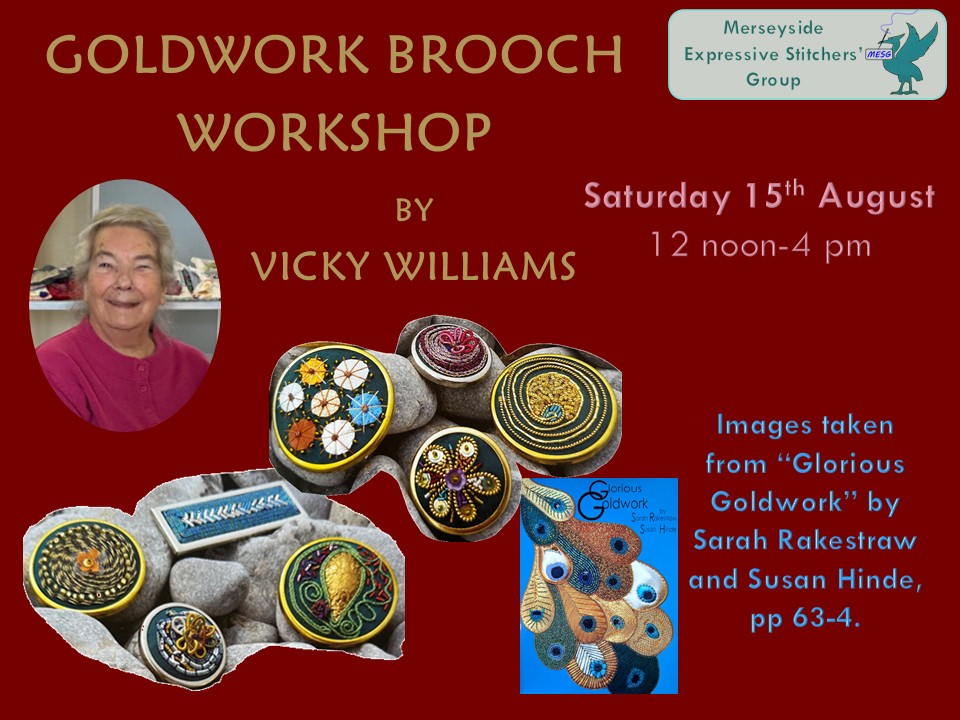
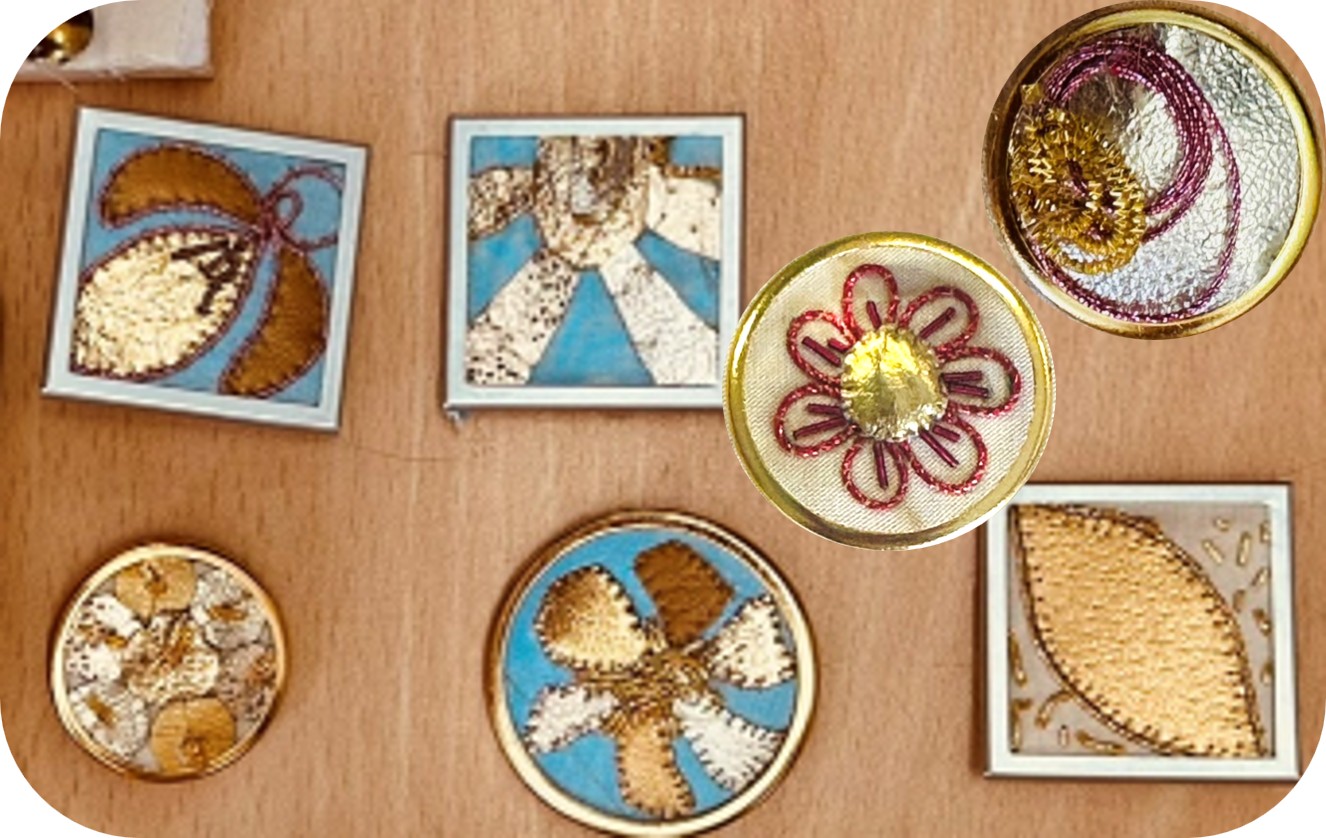
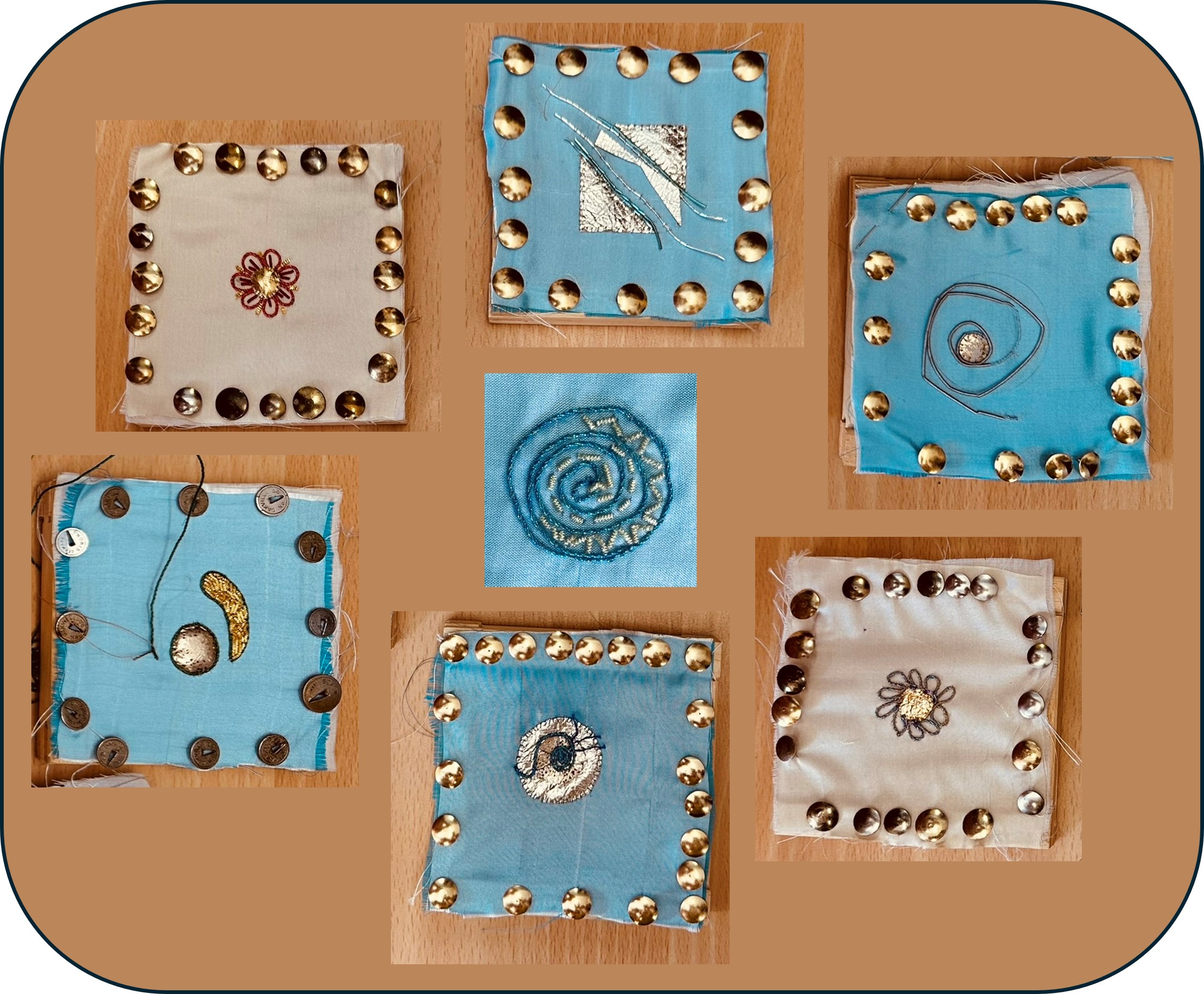
Our August workshop was given by Vicky Williams, a long-standing member of our group, who has a lifetime of experience in a variety of different types of embroidery, including Goldwork. The 4-hour workshop focussed on making a goldwork brooch using a variety of stitches and techniques, with excellent tuition provided by Vicky who talked us through all the steps and give individual help and attention to all who attended. We were provided with kits that contained different goldwork threads and the hardware to make two brooches with threads left over for future projects. Also provided were images of ideas for designs for our broaches. About half of the attendees finished at least one brooch, and a few completed two.
by Michele King
Three Dimensional Structural and Sculptural Embroidery Stitches
talk given by Isobel Currie on 18 July 2026
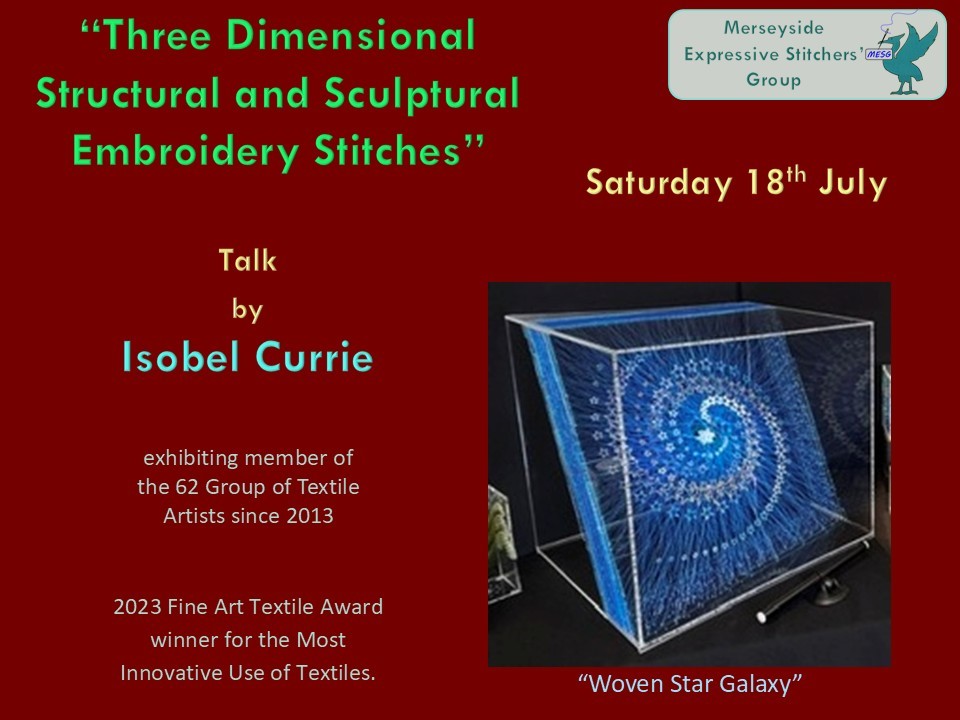
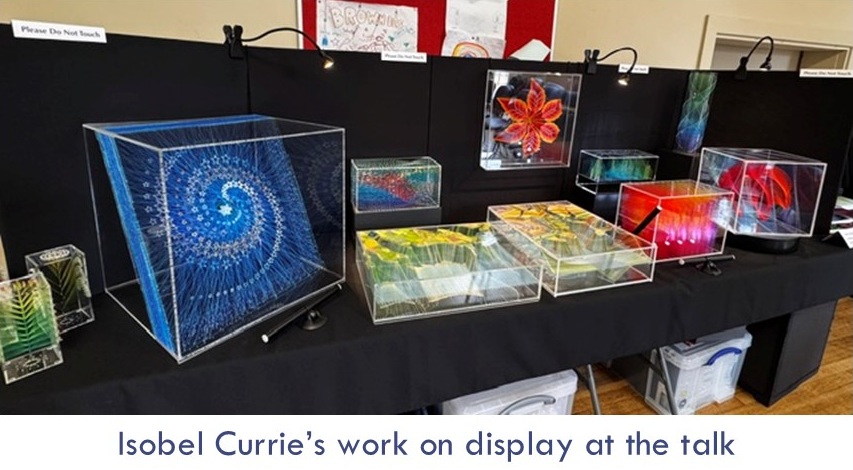
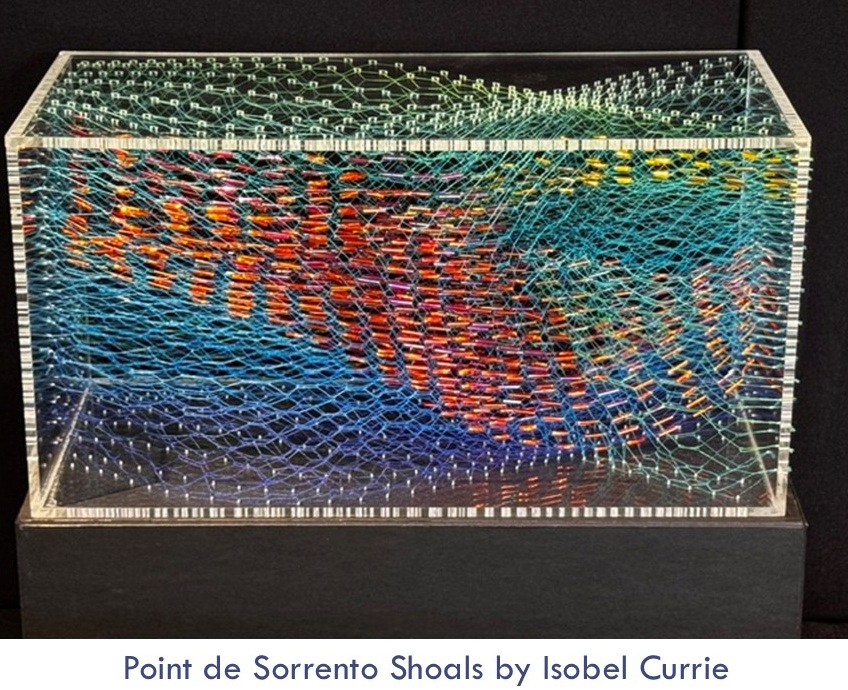
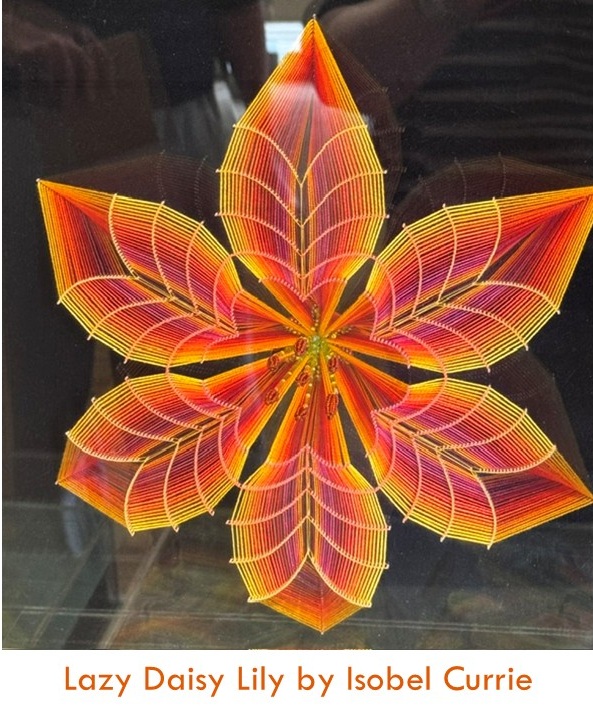
In July we had the pleasure of having Isobel Currie as our speaker. Isobel is an award-winning three-dimensional textile artist; her aim is to celebrate the three-dimensional beauty of embroidery stitches by exploring their structural and sculptural potential and investigating the unique interaction that traditional stitches have with their supporting medium … and she does this in a unique, innovative and contemporary way to produce stunning pieces of work, some of which she displayed during our meeting. Isobel gave a comprehensive, and clear, talk, which included many aspects of her artistic life which began at the tender age of 3. With the aid of an illustrated slide presentation she clearly presented the evolution of her work, from how she began her journey of three-dimensional work to the amazing and unique pieces she makes today; this included her thought process, planning and execution. For example, her “Woven Star Galaxy” (42 x 42 x 42 cm) uses threads and beads to depict a spiral arm galaxy; Isobel described the complicated design and execution to make this piece, which took a year from start to finish! Isobel displayed a collection of her work so that we could truly appreciate it with close study to reveal the wealth of detail and interplay of the vibrant thread colours. For more images and information on her work see her website: www.isobelcurrie.com , her Instagram Account: “Isobel Currie Artist” and/or her facebook page: “Isobel Currie, Embroidery Artist
– Report written by Michele King

Creating Texture Workshop
talk given by Patti Owen on 20 June 2026
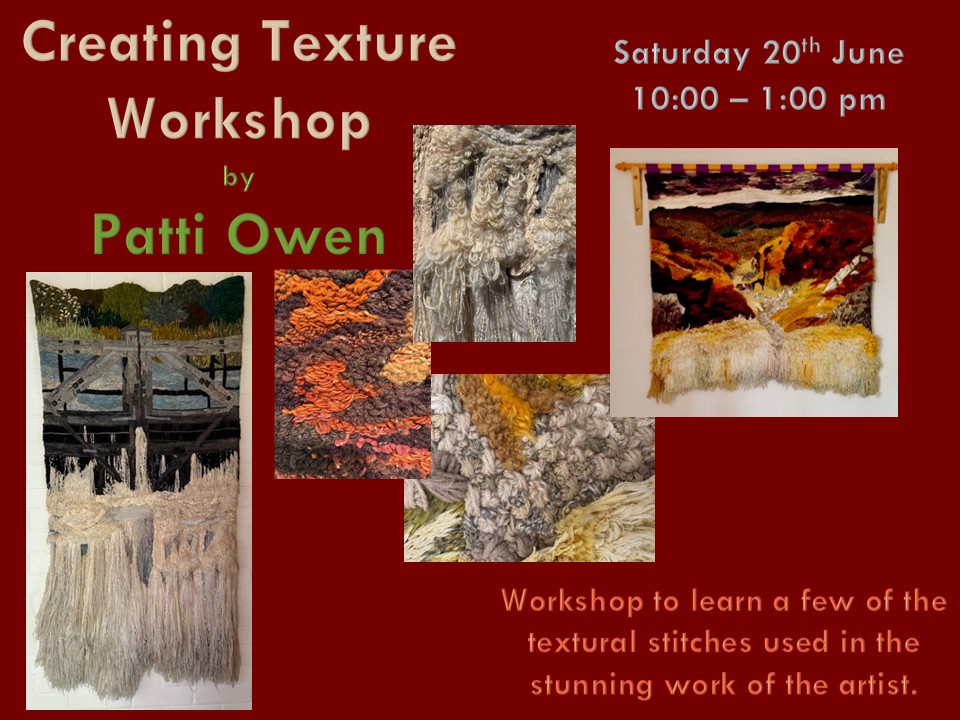
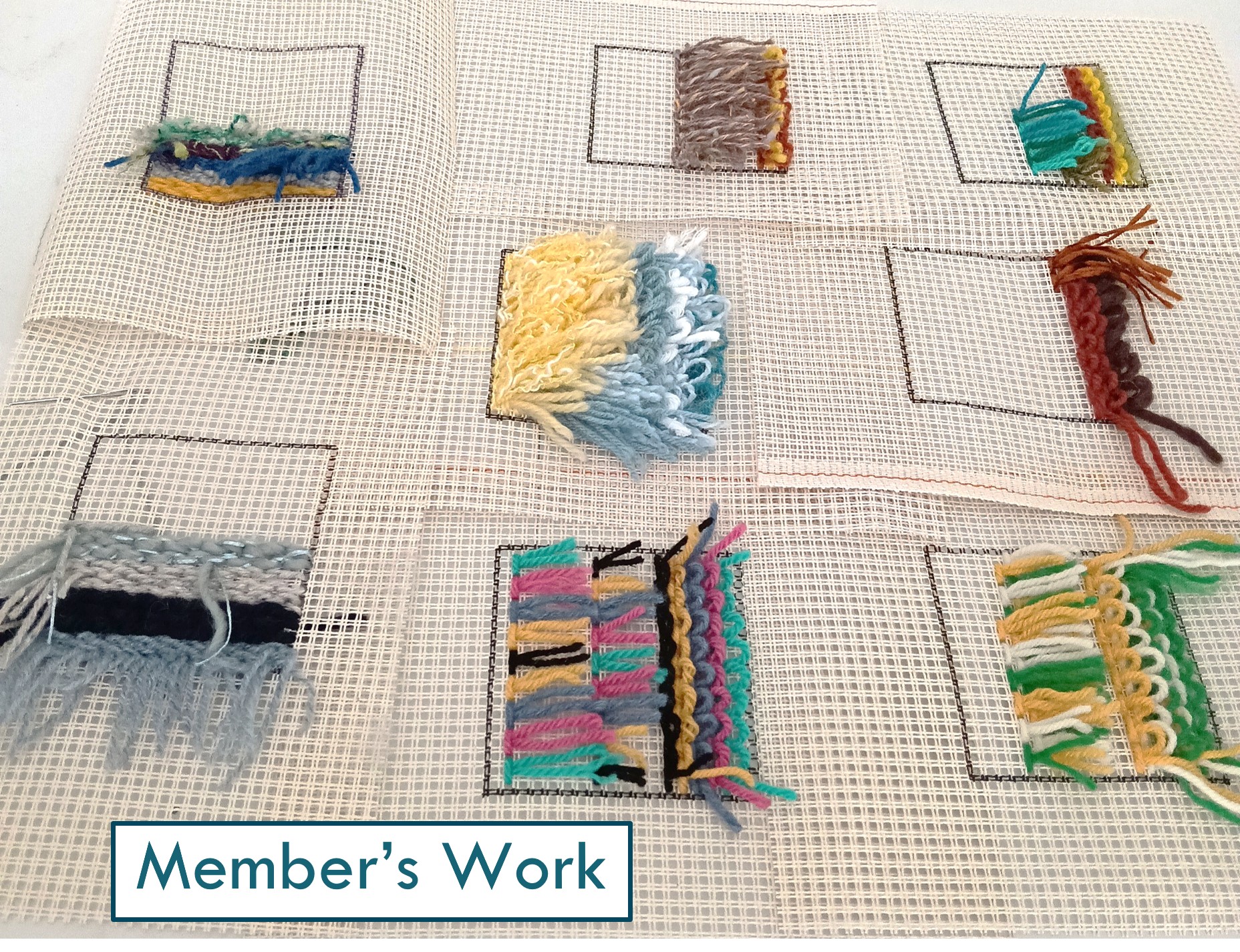
In a workshop that followed on from her talk last year, Patti Owen gave us a small glimpse of two of the techniques used in her fabulous textured wall hangings.
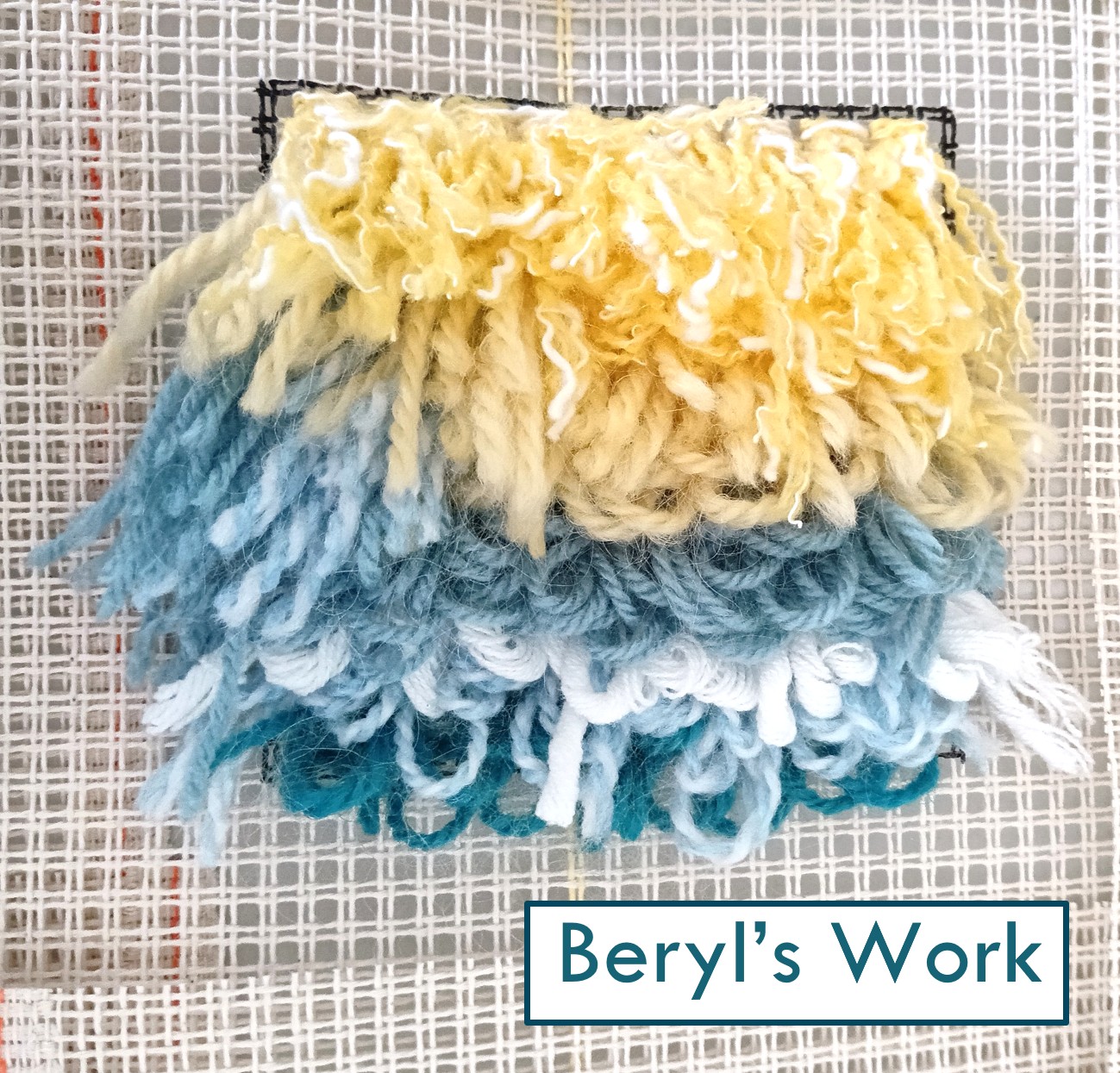
The workshop was centred around one main stitch: rya or Turkey stitch. Everyone had a sample of rug canvas and a large variety of wools, cords and ribbons to choose from, which made each piece unique. Rya stitch produces a looped pattern on the front side of the work and a straight stitch on the back. This proved useful when stitch-counting skills went awry. Loops could be as large as we wished, although it proved challenging to keep them as neat as Patti’s. She was a patient and encouraging tutor, willing to help out as many times as necessary before success came and we could finally settle into a quiet and therapeutic rhythm.
Patti’s work often has an element of fringing and the second technique showed us how to create and vary cut stitches to change the look of our samples. Some experimented with different colours and others with different threads to create a collection of unique pieces. Using just one stitch a lot of different textural effects can be created. The session seemed to go by very quickly and, after three hours of work on our tiny samples, it gave us a newfound respect for the amount of work that must go into Patti’s large-scale hangings.
– Report written by Kim Parkman

The Materials and Techniques used in Ecclesiastical Embroidery
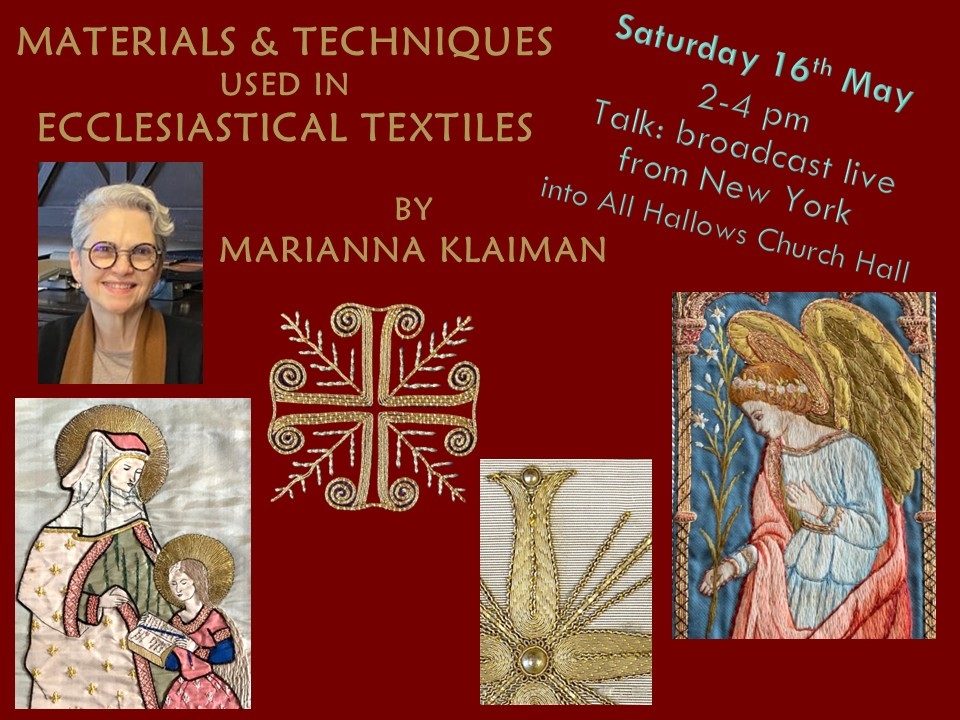
talk given by Marianna Klaimann on 16 May 2026
In a first for Merseyside Expressive Stitchers’ Group, Marianna Klaimann gave a talk on ‘The Materials and Techniques used in Ecclesiastical Embroidery’ in a live broadcast from New York. Marianna had previously contacted the group about the collection in Liverpool Cathedral and visited Liverpool last year. She is one of the foremost researchers and conservators of ecclesiastical textiles in the United States, so we were excited to learn not only about her historical research but also about contemporary work that is being carried out, especially in her home state.
Marianna gave us a comprehensive guide to the development of different types of ecclesiastical garments and the changes in embellishment over the centuries. Most garments were made in silk and we traced its development from its origin in China, through the introduction to Europe in the sixth century and the growth of specialist areas of manufacture, such as Lyon in France. Huguenots brought their skills to Spitalfields in London and, in the nineteenth century, America had its own ‘Silk City’ in Patterson, New Jersey.
Manufacturing changed, but the garments remained objects that were special and luxurious, and we saw some beautiful examples in silk, brocade, velvet and cloth of gold. They were embellished with jewels, beads, spangles, sequins, tassels and lots of embroidery, often in real gold or silver thread. Marianna even showed us how the original patterns were transferred onto the cloth, ready to be sewn.
Pieces that wore out over time were broken up and remade in response to changing fashions or beliefs. Nowadays synthetic gold thread, or even aluminium, is used, as it does not tarnish, but the same skills are still being used to create new pieces. Watts and Co in England and St Hilda’s Guild in New York still carry on the traditions of ecclesiastical embroidery that were started in the early days of the Christian church. When the Elizabeth Hoare Gallery in Liverpool Cathedral is re-opened we will look with different eyes at the splendid collection on our doorstep.
– Report written by Kim Parkman
18th April 2026 workshop report
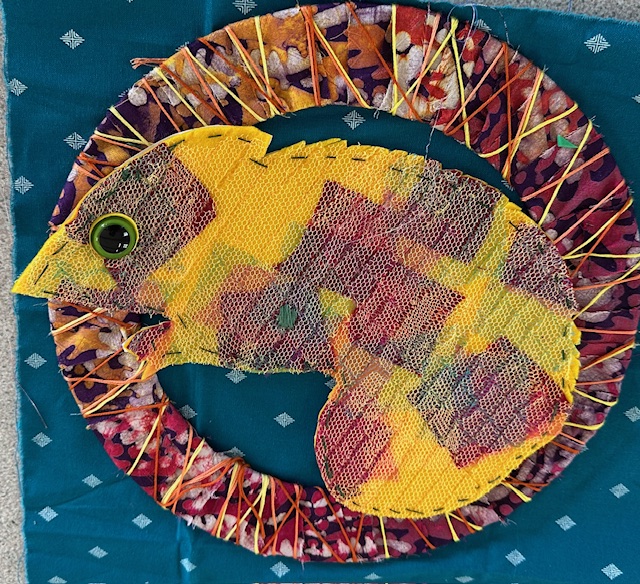
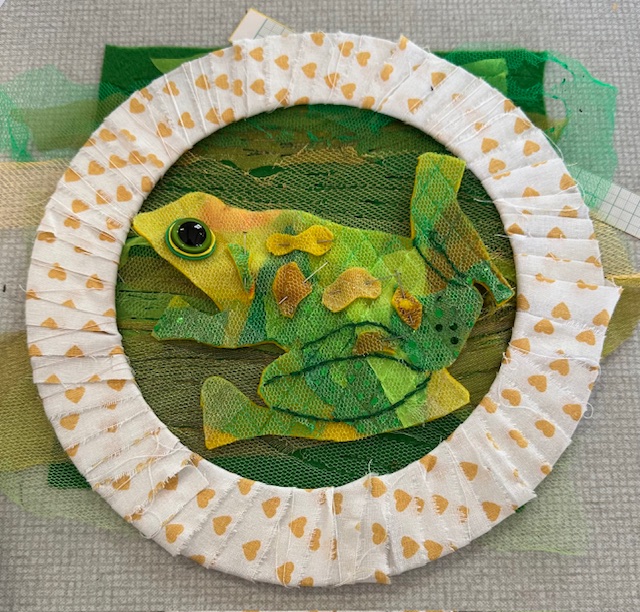
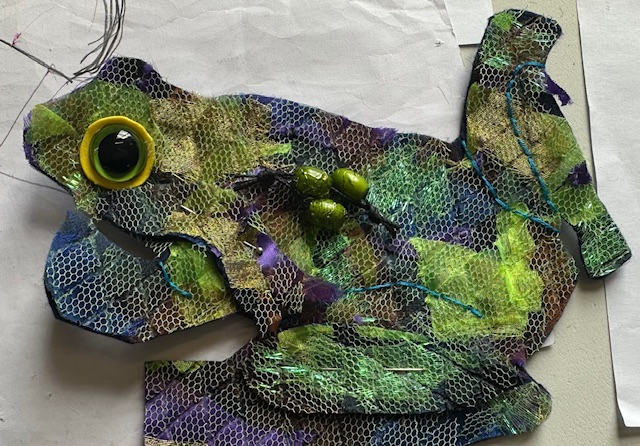
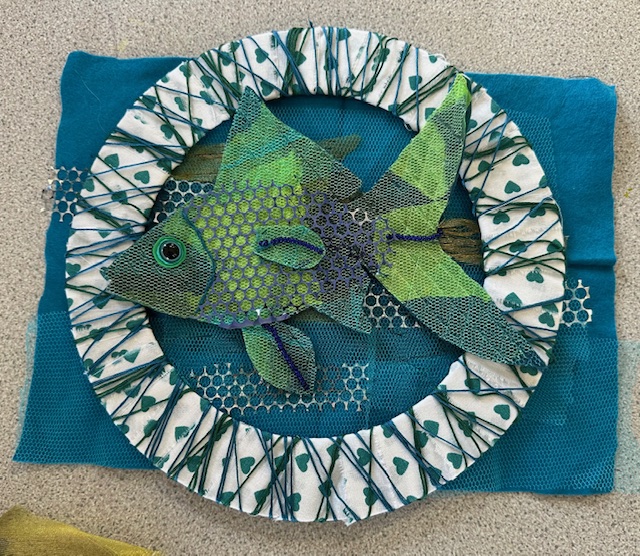
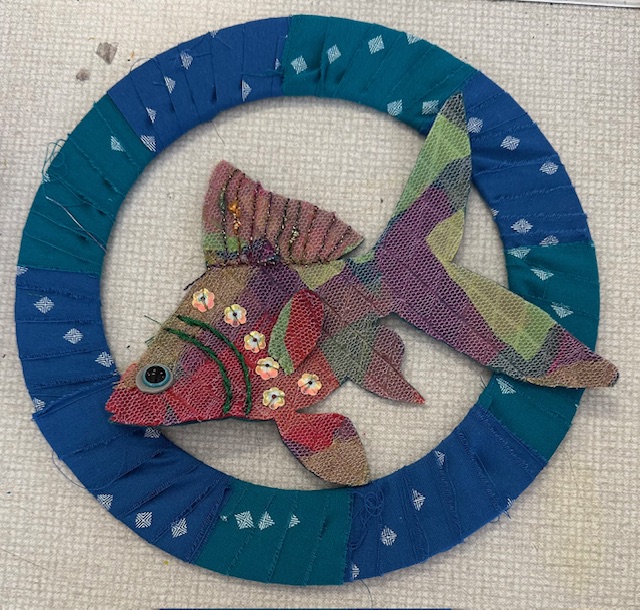
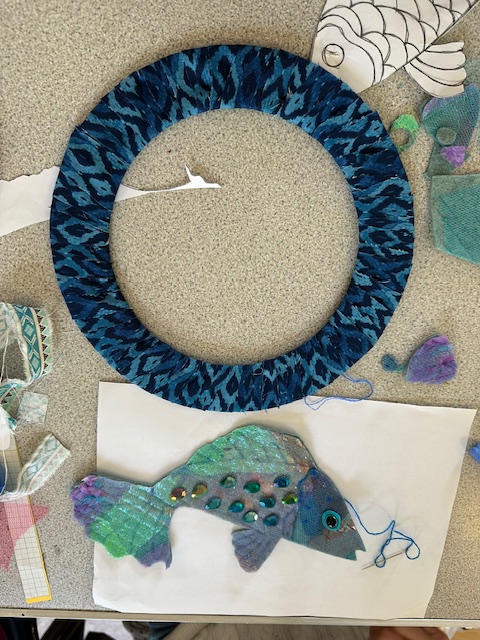
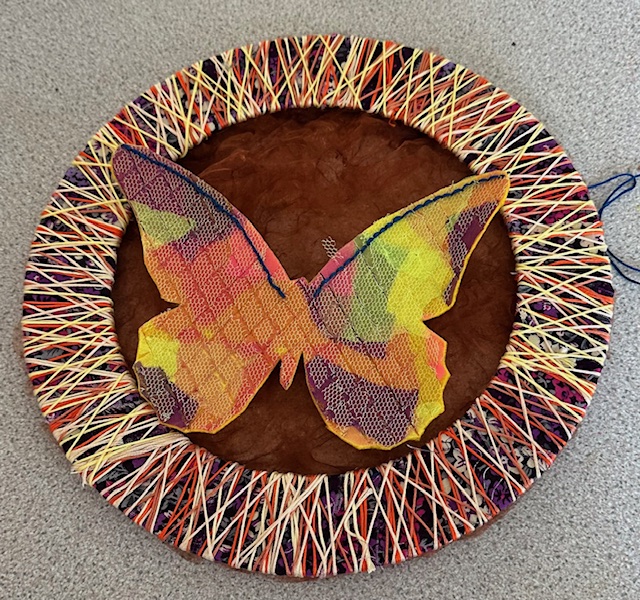
Nikki Parmenter returned to All Hallows to host an experimental workshop entitled ‘Small Worlds’. Each member was given a wire hoop on which to create their own small world of a creature against a backdrop. We had fish, frogs, seahorses, butterflies and other animals from which to choose a template, and a huge pile of materials and embellishments (much of it generously supplied by Nikki), so the hoop soon became the only common feature of the work.
After a basic outline of the initial stages of the process, we all began to work at our own pace. Some started straight away on building up the chosen animal from felt, sheers and net held together by Nikki’s signature soldering iron technique. Others opted for a gentler start by covering the two outer rings of the hoop with patterned fabric, sometimes overlaid with embroidery threads to give more texture. Nikki moved around the room, offering help and new ideas, especially to those feeling very much outside their comfort zone.
By lunchtime, the basics were in place, so the afternoon session was about how to finish off the work. Most people had opted for hand sewing, but a couple of machines could also be heard whirring in the background. We were shown how simple embellishments to the backdrop could be created with a hot gun, and a background to the piece by layering materials and threads. Nikki even managed to invent a new technique on the spur of the moment!
The day seemed to go very quickly, with everyone having something colourful and positive to show for their work and an idea of how it might be completed. With so many comments on how enjoyable the day had been, we may well see Nikki again for another colour-filled workshop.
by Kim Parkman
History and the“genealogy”of Merseyside Expressive Stitchers’ Group
talk given by Michele King on 21 March 2026
The group had a rare chance to reflect on our own history in a fascinating talk given by our co-chair, Michele King, on 21st March.
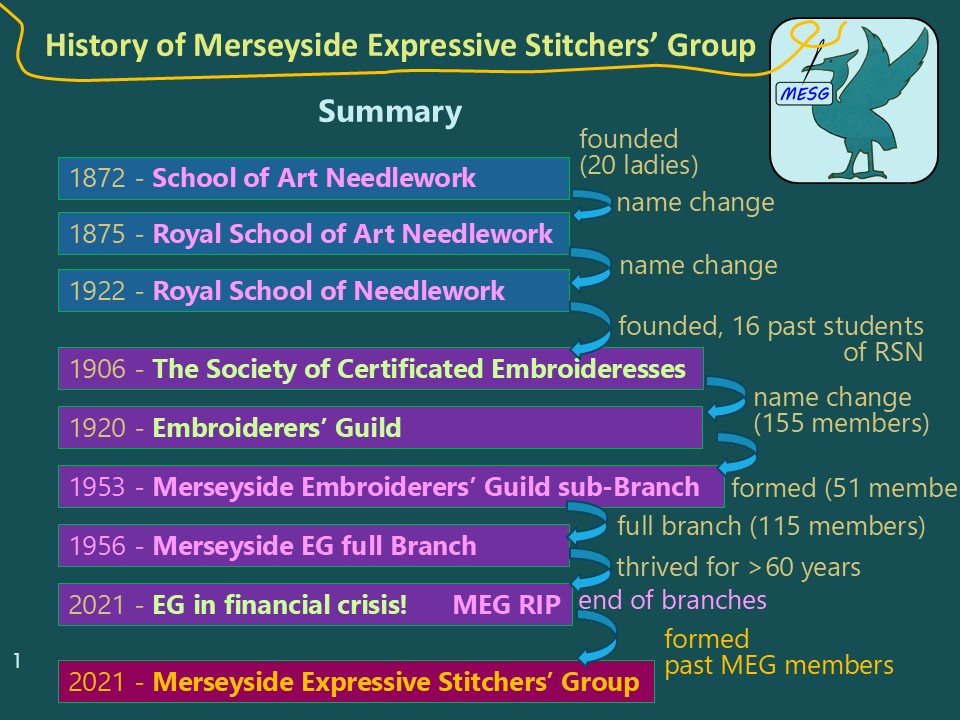
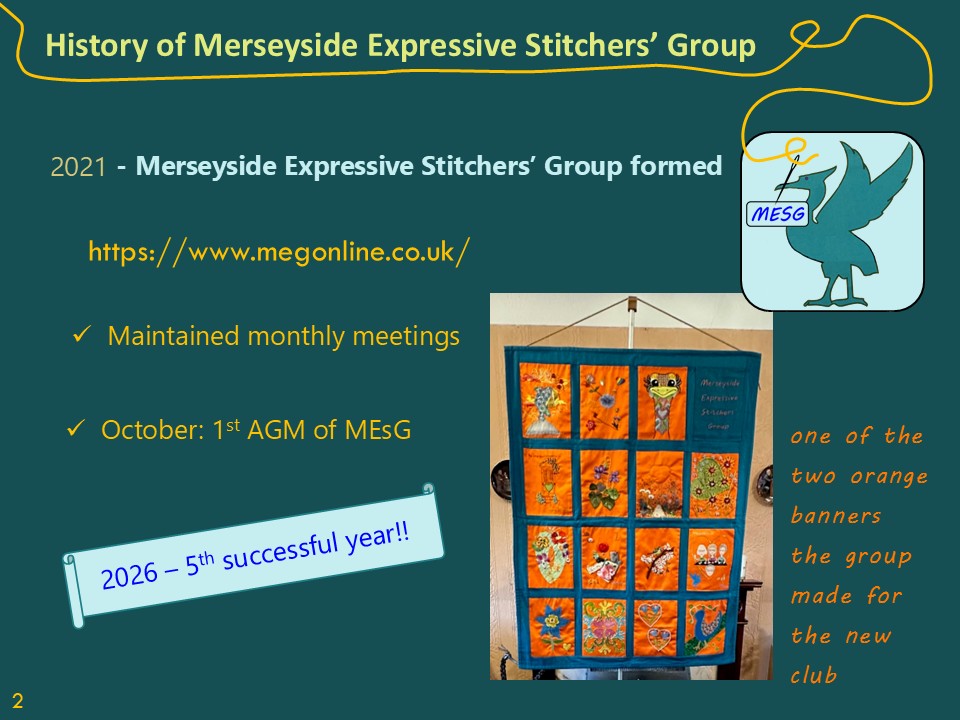
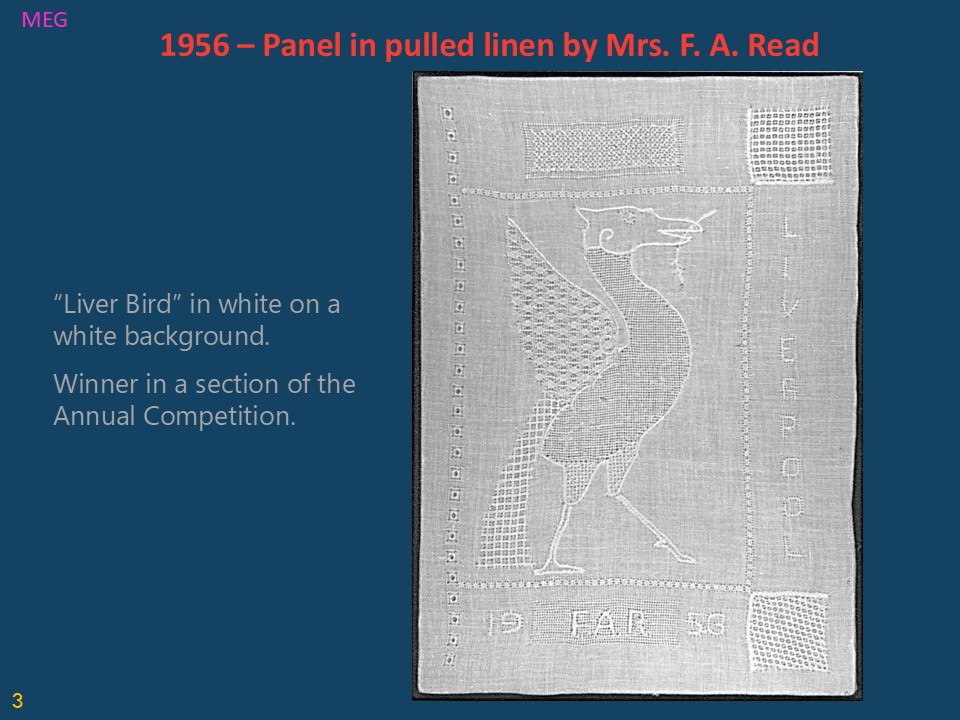
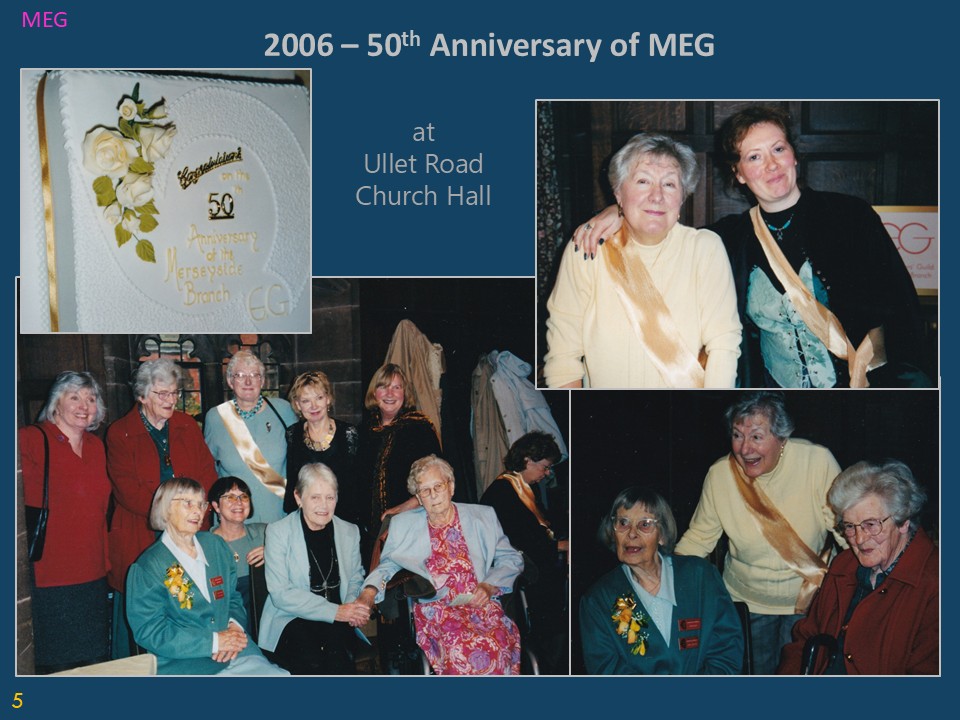
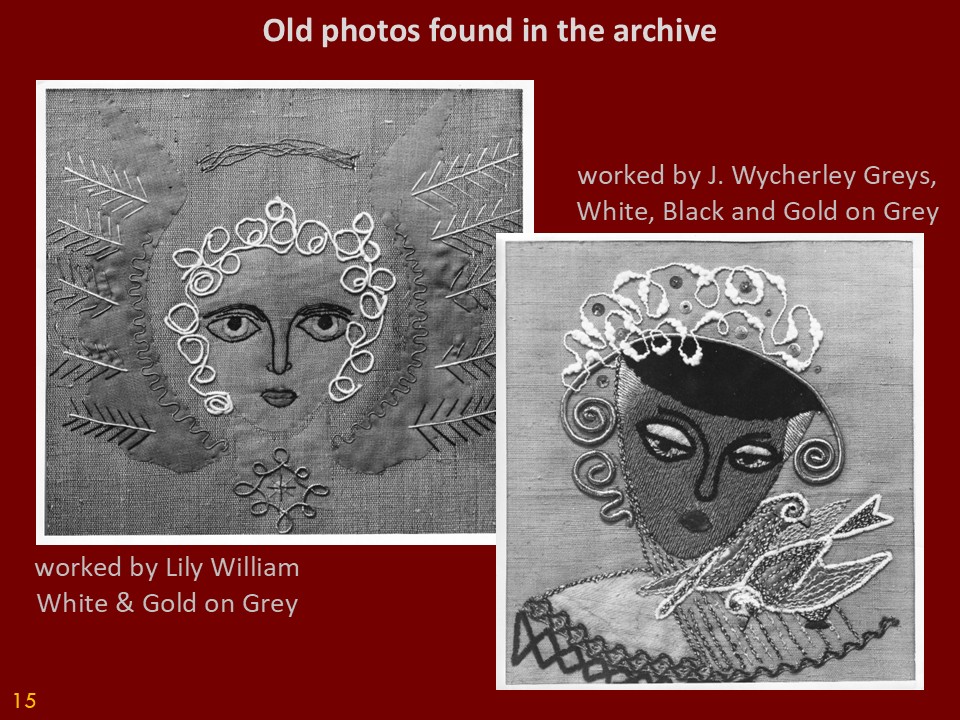
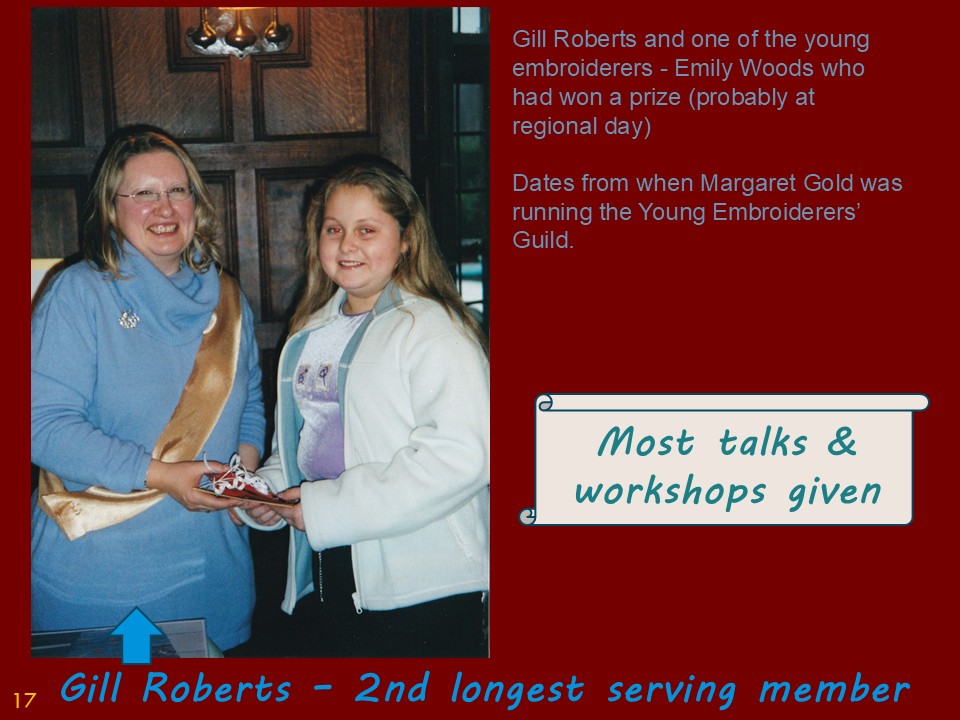
Michele had combed the archives to trace the emergence of the Embroiderers’ Guild from a small group of ‘ladies’ in London in the late nineteenth century. She followed our history as the Merseyside branch from its formation in 1956 under the Guild through to the final days of the old group, and the formation of the current lively (and fiercely independent) branch known as the Merseyside Expressive Stitchers’ Group. Along the way we heard the recurring story of trying to match the enthusiasm throughout the country for stitch and textiles with the realities of a changing society and the economic problems of keeping a centralised body to oversee the branches.
We saw black and white pictures from the early days of beautiful stitchwork on the tray cloths and aprons that we remembered from our grandparents’ homes, and colourful experimental work that developed from the 1960s as imaginations were allowed a freer rein. The branch changed with the times, combining a reverence for traditional techniques with a constant search for cutting-edge tutors to open our horizons.
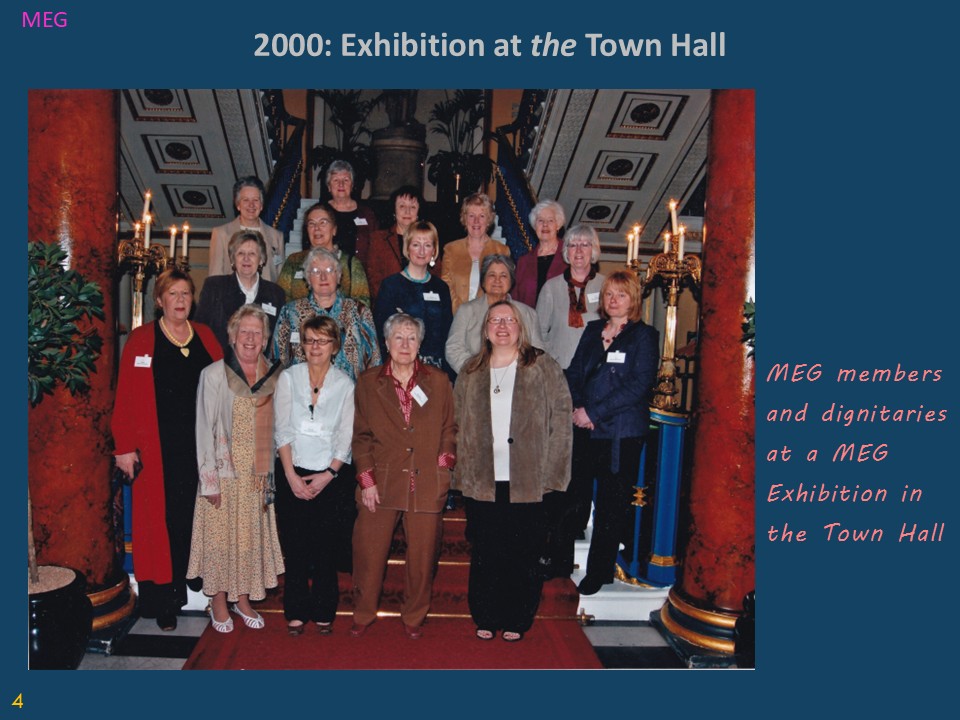
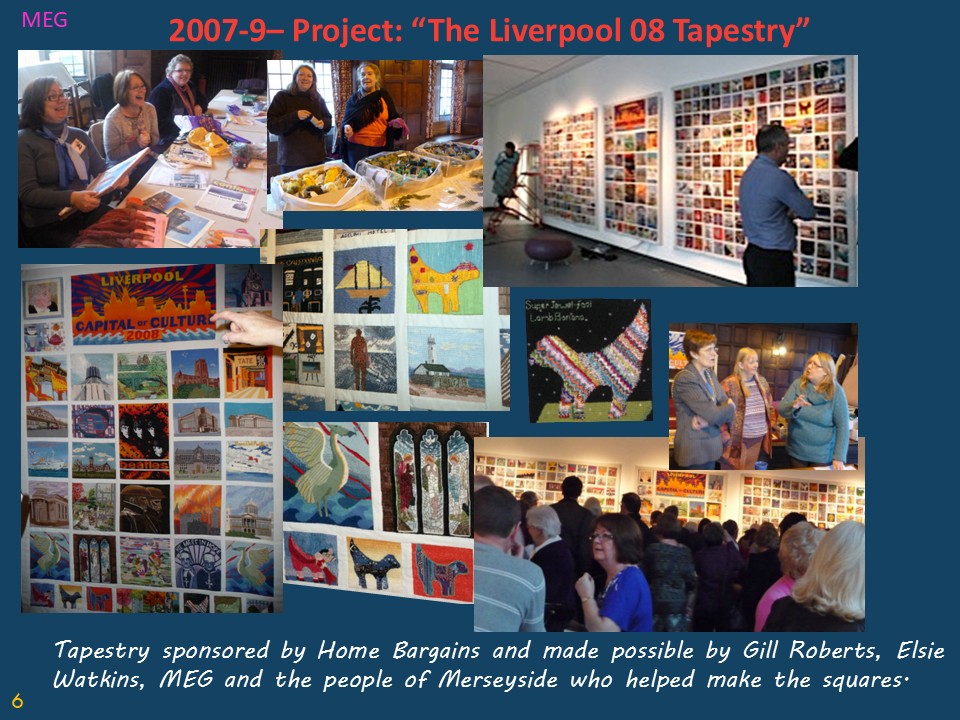
With such a huge topic, Michele could only choose a few highlights from our long history. We hosted two very successful Regional Days: the first during the fantastic City of Culture year in 2008 in the Town Hall, and the second in 2020. The first Regional Day included a talk by the renowned Alice Kettle and gave rise to a huge community project. The Liverpool 08 Tapestry, funded by Home Bargains, gave the whole community of Liverpool, regardless of skill level, a chance to make a part of the city’s history and set a pattern of community engagement for the branch. The 2020 event turned out to be the first held on Zoom (because of the COVID pandemic) and the last ever held under the umbrella of the Embroiderers’ Guild. Members from all over the country, who had been following our website, joined in to make it the first Regional Day that went nationwide.
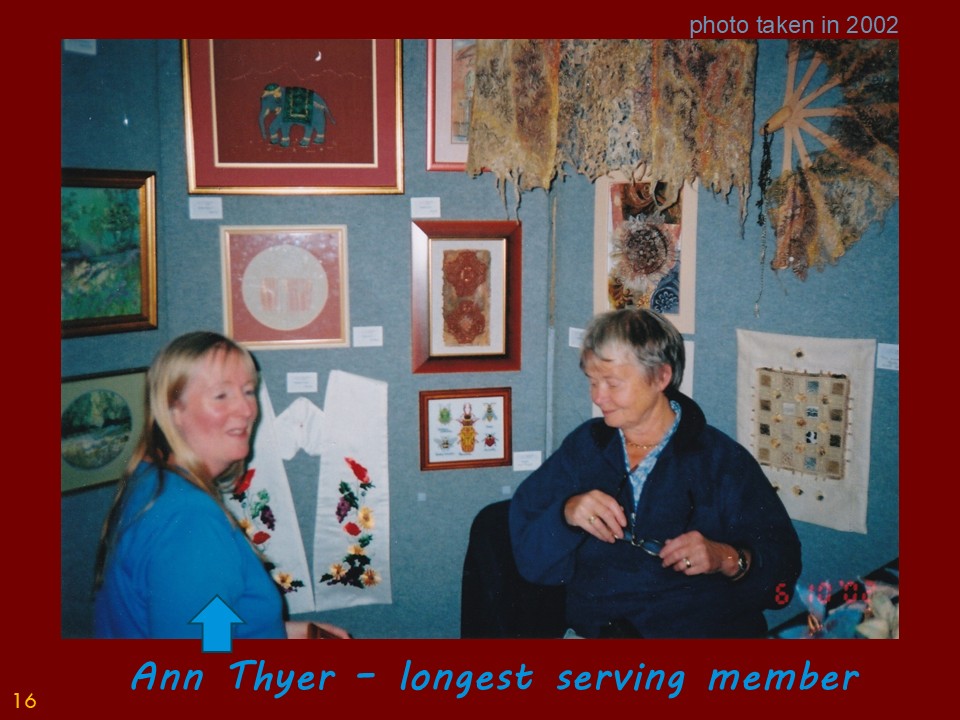
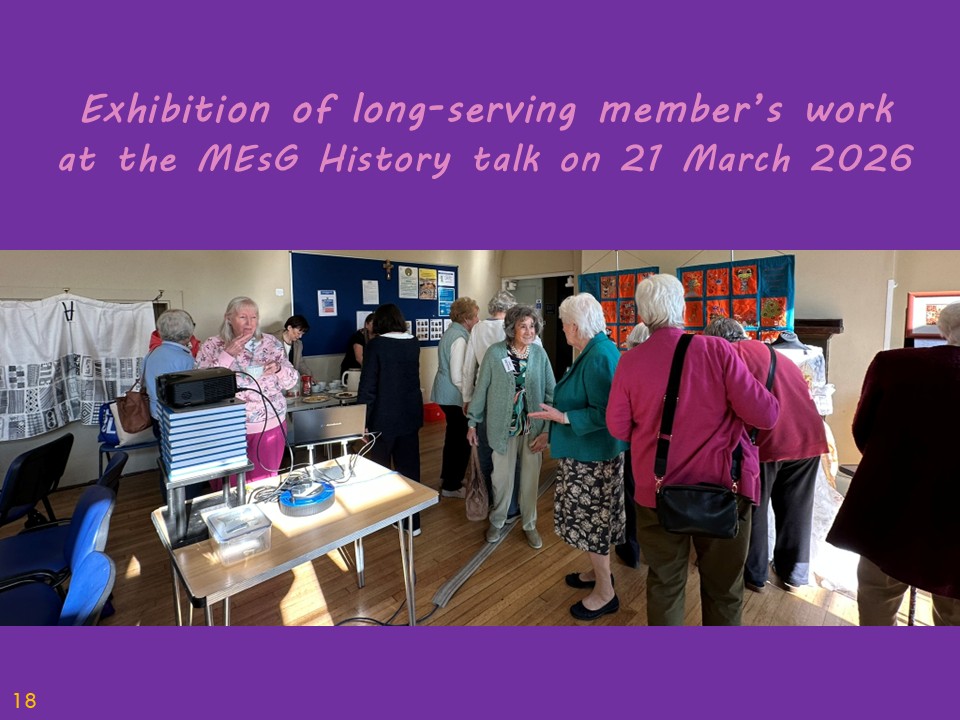
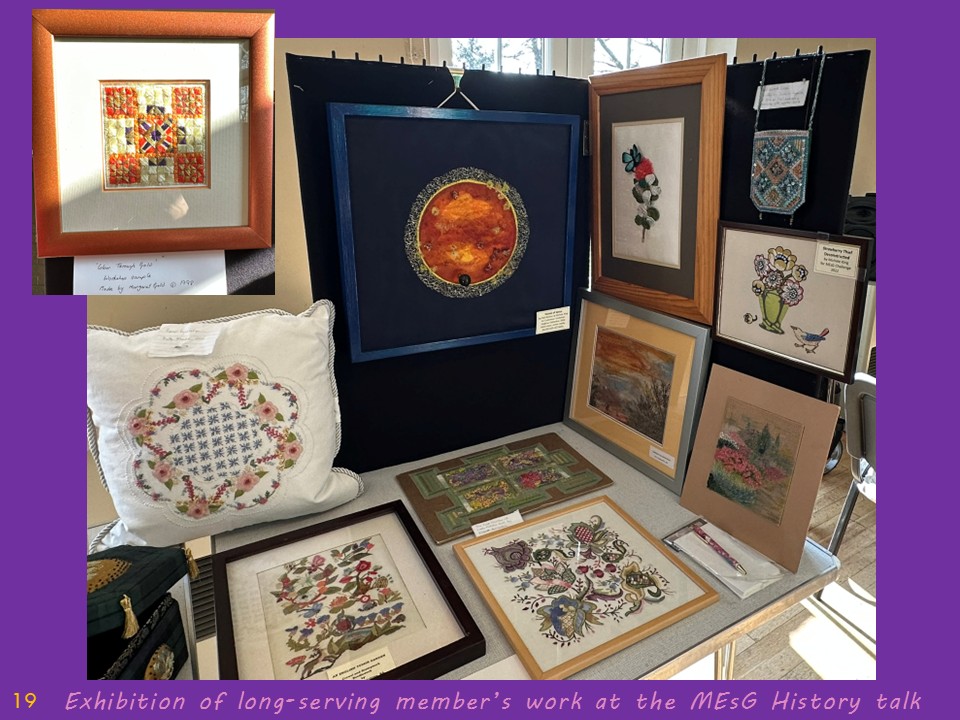
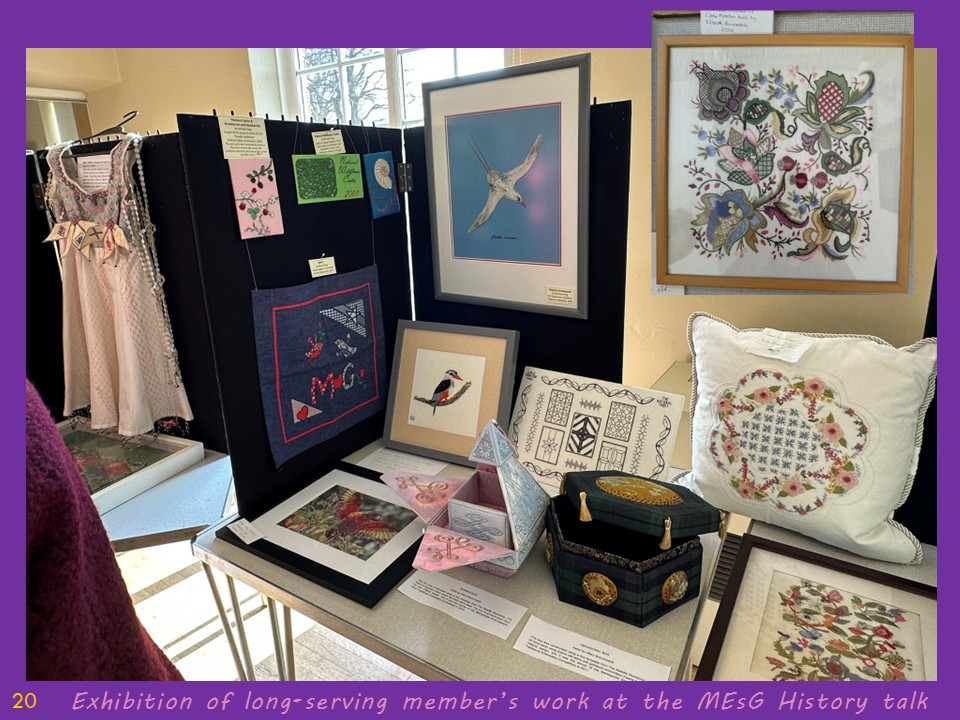
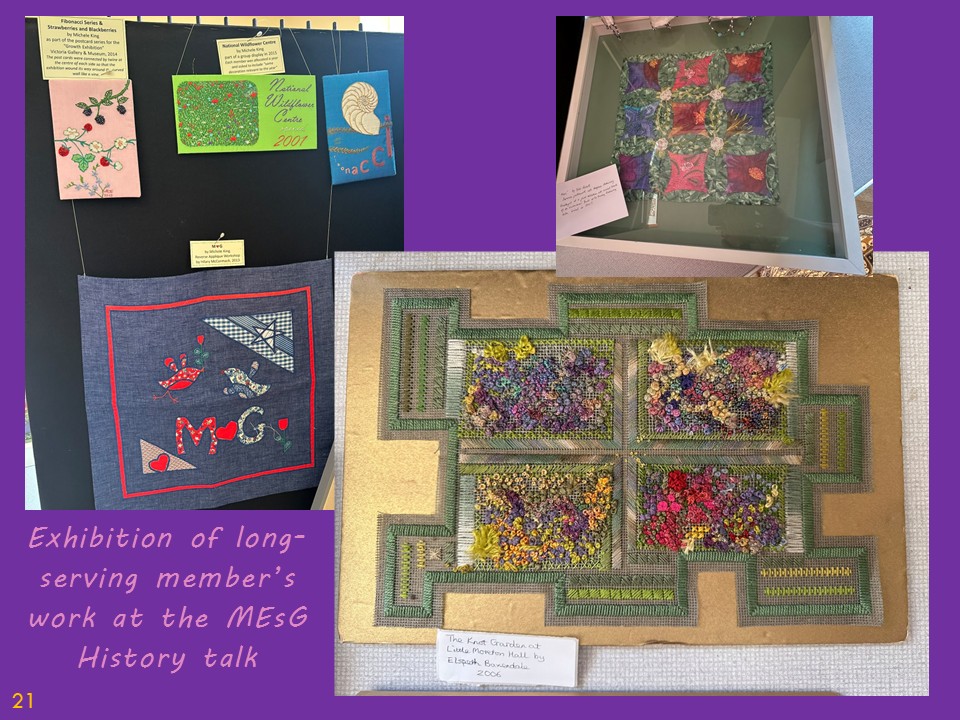
The meeting also included a small exhibition of stunning work from some of longer-standing members, which was enjoyed by all.
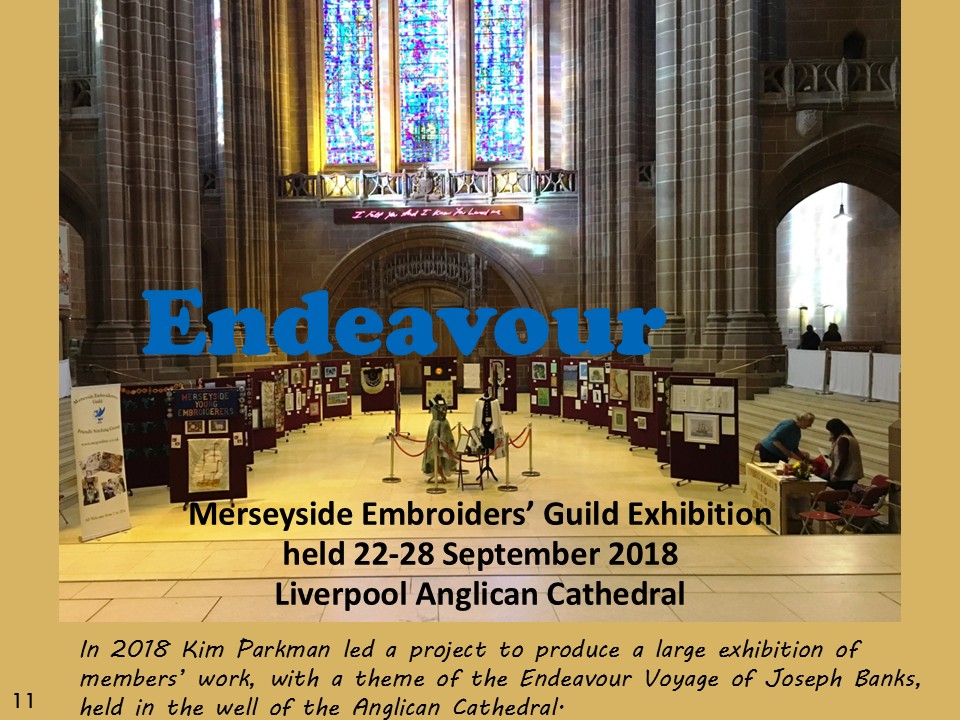
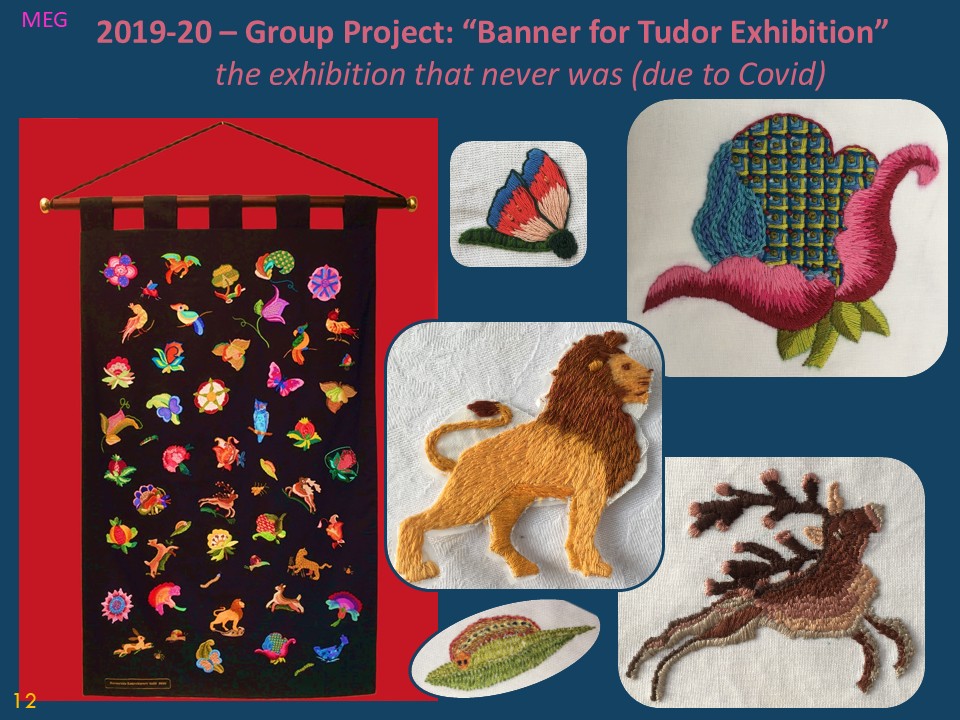
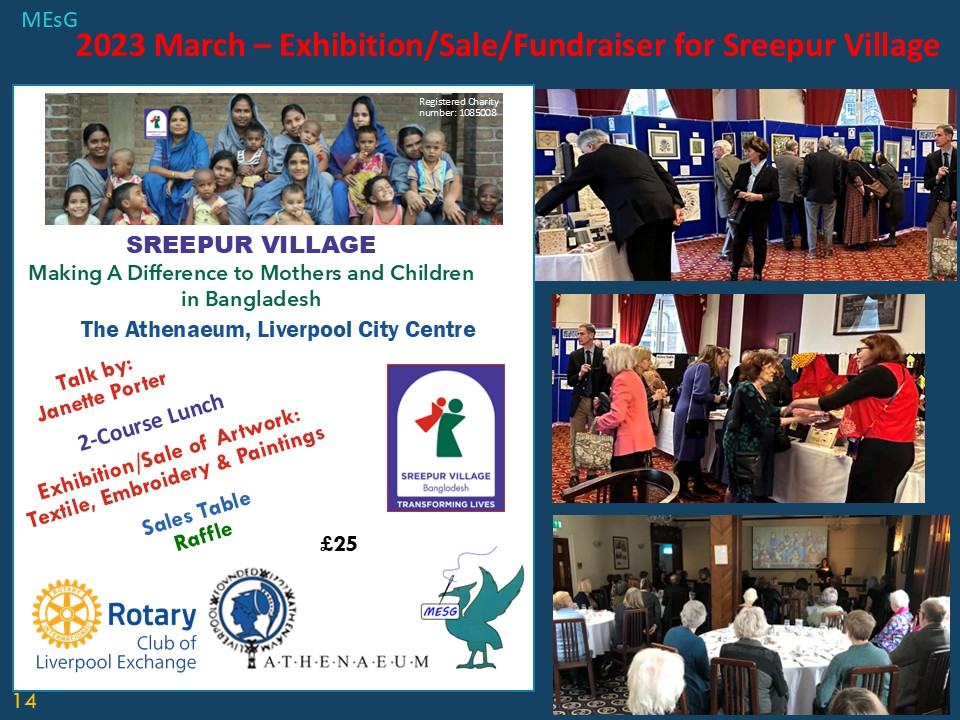
We have many longstanding members, who thoroughly enjoyed a trip down memory lane during the showcase of past events, adding to the talk with anecdotes and comments. Newer members were surprised to see exhibitions that had been held at the Anglican cathedral; Kaffe Fassett at a workshop in All Hallows and our support for Sreepur Orphanage in Bangladesh. Former group projects were displayed around the hall, and a superb exhibition of past individual work by our members really demonstrated the skill levels within the group.
At the end of a lively afternoon, several members felt that all of this knowledge and history should not be lost. We would welcome any contributions from members who are able to identify some of the events and people featured in the talk, so that we can preserve as much as possible of our past, while still continuing to explore the boundaries of stitch and textiles. Merseyside Expressive Stitchers’ Group is only five years old this year. Who knows what memories we will make for the future members to see?
– Report written by Kim Parkman
21st February 2026
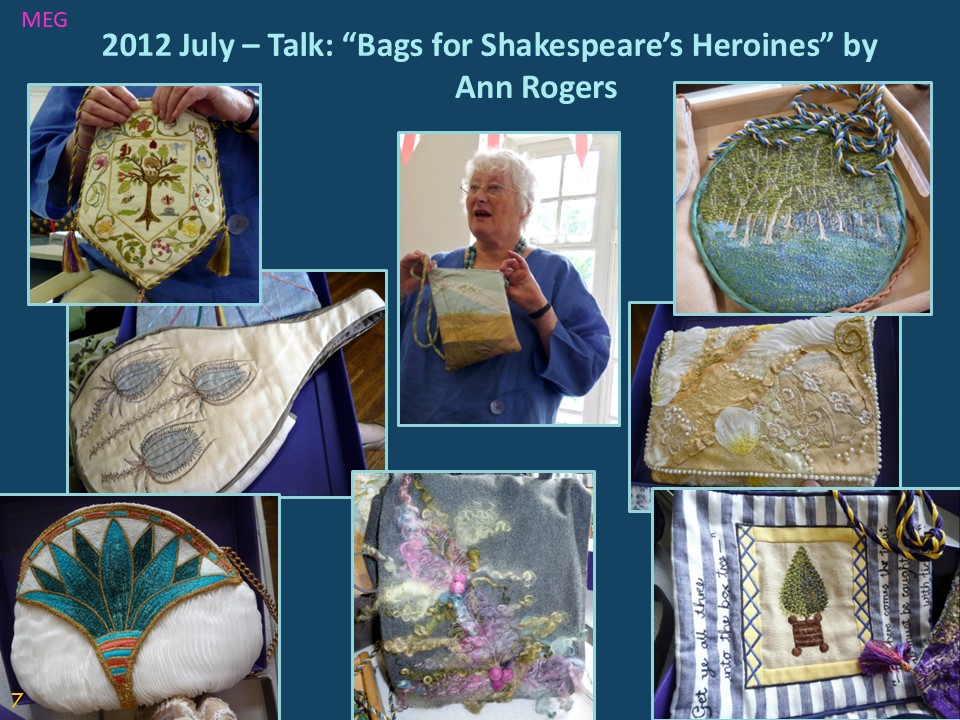
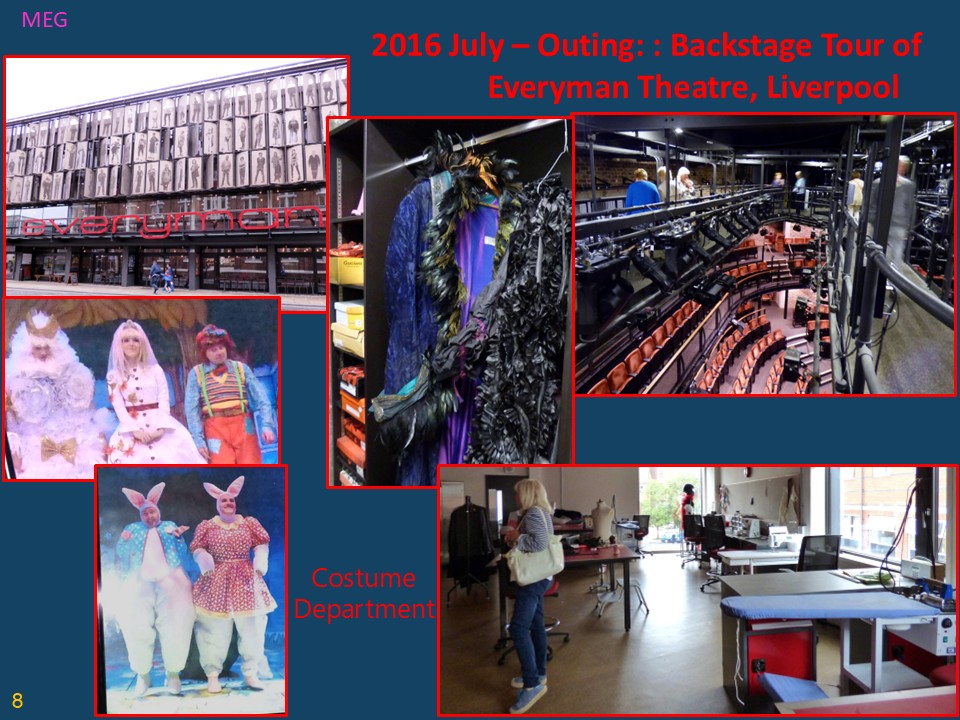
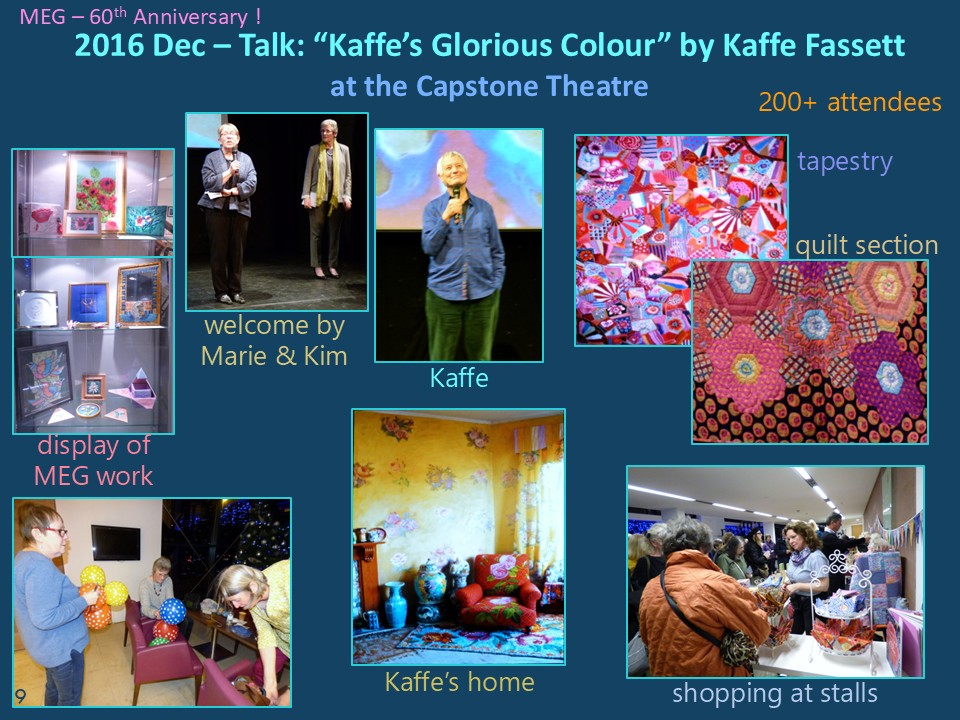
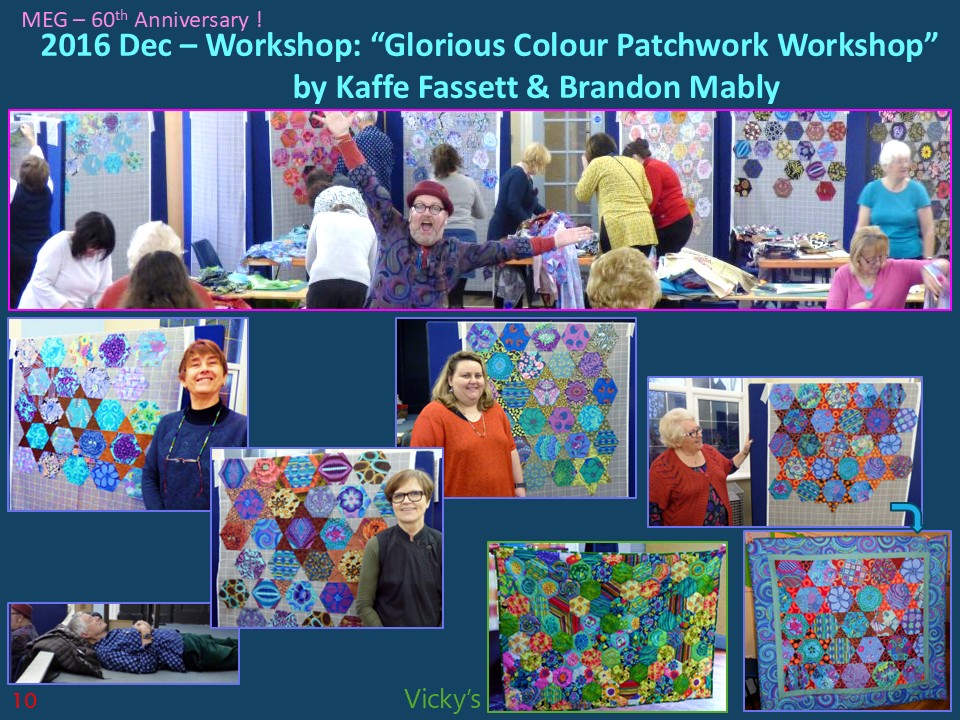
Kim Parkman ran an interesting workshop about how to use canvas work stitches based on the architecture of Florence. We were challenged to use geometric designs with various colours to create a book mark sample. Here are some photos of the day:


17th January 2026 Stitch and Natter
An afternoon session where we brought in our own work, shared ideas and learned a lot from each other because all our members have different skills and abilities. Refreshments were included which we all enjoyed.